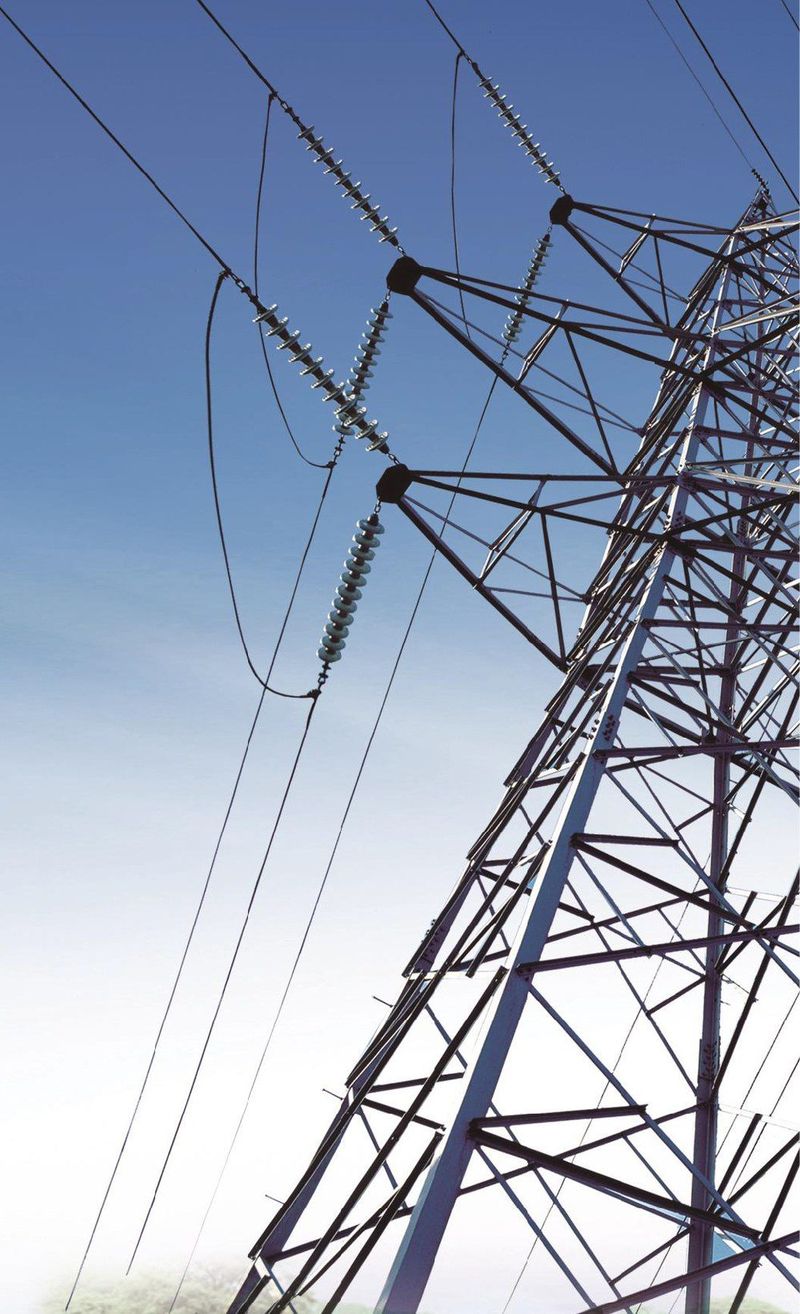
Galvanizing Thickness by Site: Coastal, Desert and Industrial
A tower coating is a maintenance budget written in microns. Specify 85 µm of zinc on a tower 40 km inland and you have bought 40 years. Specify the same coating on a site 2 km from the sea and you have bought 15. The steel is identical; the site is not.
This is the part of a tower specification that buyers most often copy from a previous project without checking. Here is what the two main standards actually require, how fast zinc is consumed in different atmospheres, and which details cause a coating to fail long before its thickness would suggest.
What the standards require
ISO 1461 is the reference used across Europe, Asia, Africa and the Middle East. It sets minimum local and mean coating thicknesses according to the thickness of the steel being coated.
| Steel thickness | Local minimum | Mean minimum |
|---|
| 6 mm and above | 70 µm | 85 µm |
| 3 mm to under 6 mm | 55 µm | 70 µm |
| 1.5 mm to under 3 mm | 45 µm | 55 µm |
| Under 1.5 mm | 35 µm | 45 µm |
ASTM A123 is the American equivalent and it runs higher on heavy sections: roughly 100 µm for steel 6.4 mm and thicker, 86 µm from 3.2 mm to 6.4 mm, and 76 µm below that. A tower designed to A123 will typically carry a heavier coating than one designed to ISO 1461, even before the owner adds a project-specific requirement.
One practical note: most tower members are 4 to 12 mm thick, so the ISO 1461 target lands at 70 to 85 µm mean. Bolts follow ISO 10684 instead, with their own coating classes, because a thread cannot carry an 85 µm layer and still accept a nut.
How fast zinc is consumed
ISO 9223 sorts atmospheres into corrosivity categories from C1 to CX. For zinc, the first-year loss rates are roughly:
| Category | Typical environment | Zinc loss per year | Life of 85 µm |
|---|
| C1 | Indoor, dry desert interior | Under 0.1 µm | Decades beyond design life |
| C2 | Rural, low pollution | 0.1 to 0.7 µm | 50 years or more |
| C3 | Urban, moderate pollution | 0.7 to 2 µm | 40 to 60 years |
| C4 | Industrial, coastal inland | 2 to 4 µm | 20 to 40 years |
| C5 | Severe marine, heavy industry | 4 to 8 µm | 10 to 20 years |
| CX | Tropical marine, salt spray | Above 8 µm | Under 10 years |
The rates fall after the first year or two as the zinc surface develops a protective patina, so the real life is usually a little longer than a straight division suggests. The ranking between categories holds, and that is the part that matters when a project is being specified.
Rule of thumb we use in quotations: inland and dry sites take standard ISO 1461 coating. Coastal sites within about 5 km of the sea, industrial zones and high-humidity tropical sites take a heavier coating, typically 100 to 140 µm, or a duplex system. Tell us the site and we will quote the coating that matches it instead of a default.
The desert case is not what people expect
Buyers often assume a desert is the harshest environment and order the thickest coating available. Dry inland desert is usually C2 or C3, because corrosion needs moisture and the air is dry. The damage in desert service comes from something else: wind-driven sand abrading the coating, and large day-night temperature swings working on bolted joints. A standard coating with a sound surface and good drainage performs well. What does not perform is a coating damaged in transit and left unrepaired.
Coastal sites are the reverse. Humidity is high, chloride is present, and the salt film stays on the steel. That is where thickness and, often, a duplex system earn their cost.
Duplex: galvanizing plus paint
A duplex coating adds a paint layer over the zinc. The paint slows the zinc consumption, and the zinc protects the steel wherever the paint is scratched. The combined system typically lasts 1.5 to 2.5 times as long as galvanizing alone, and it is worth the cost when the design life is 40 years or more on a C4 or C5 site, or when recoating would mean sending a crew up a 70 m tower in a remote location.
It is not worth it on a 25-year inland line. The paint adds cost, adds a surface preparation step, and adds a failure mode if the adhesion is poor.
Details that fail before the coating does
- No vent or drain holes. Sealed hollow sections trap air and acid, and the inside never coats. Every closed section needs a vent at each end and a drain at the low point.
- Sharp edges and weld spatter. Zinc pulls thin over a sharp corner. Edges are ground and welds cleaned before pickling, or the coating fails there first.
- Overlapping surfaces. Two plates bolted or welded tight leave a gap the zinc cannot enter. The gap becomes a crevice and a corrosion cell.
- Uncontrolled silicon in the steel. The Sandelin effect gives an over-thick, brittle layer that cracks on erection. Chemistry control belongs in the steel order.
- No coating thickness record. The measurement is the evidence. Ask for readings per batch, taken with a magnetic gauge to ISO 2178 or ASTM E376.
None of these cost much to get right at the fabrication stage. All of them cost a lot to fix once the tower is standing.
Standards & References
- ISO 1461 — Hot dip galvanized coatings on fabricated iron and steel articles
- ISO 9223 — Corrosion of metals and alloys, corrosivity of atmospheres, classification
- ASTM A123 — Zinc (hot-dip galvanized) coatings on iron and steel products
- ISO 10684 — Fasteners, hot dip galvanized coatings
- ASTM E376 — Measuring coating thickness by magnetic field methods
Questions we get on this topic
How long does 85 microns of zinc last?
It depends on the atmosphere. Zinc loses roughly 0.5 to 1 micron a year in rural air, 2 to 3 in urban or industrial air, and 4 to 6 within a few kilometres of a coastline. An 85 micron coating therefore gives around 40 to 60 years inland and 15 to 25 years in a severe marine site. The tower design life and the site category should be matched before the order is placed, not after.
Is a thicker coating always better?
No. Above roughly 150 to 200 microns the coating becomes brittle and can crack or flake during transport and erection, especially on thick sections and at edges. Over-thick coatings usually come from uncontrolled silicon in the steel rather than from a deliberate specification. What matters is a controlled coating that meets the standard, not the maximum number on a gauge.
When is a duplex coating worth the extra cost?
A duplex system, galvanizing plus a paint layer, typically extends service life by 1.5 to 2.5 times compared with galvanizing alone. It pays on coastal and industrial sites where the design life is 40 years or more, and on structures where recoating is expensive, such as tall towers and remote line sections. On inland sites with a 25 year life it is usually money spent for no reason.
Can damaged galvanizing be repaired on site?
Yes, within limits. Small areas damaged during transport or erection are repaired with a zinc-rich paint applied in two coats to reach the specified thickness, following the repair clause in ISO 1461. Larger areas, or damage on a structural weld, need the part re-galvanized. The repair procedure and the acceptable damage area should be written into the contract.
Tell Us the Site and We Will Quote the Coating
Distance to the coast, industrial exposure and design life are enough for us to propose a coating class with the quotation.
Request a Quote