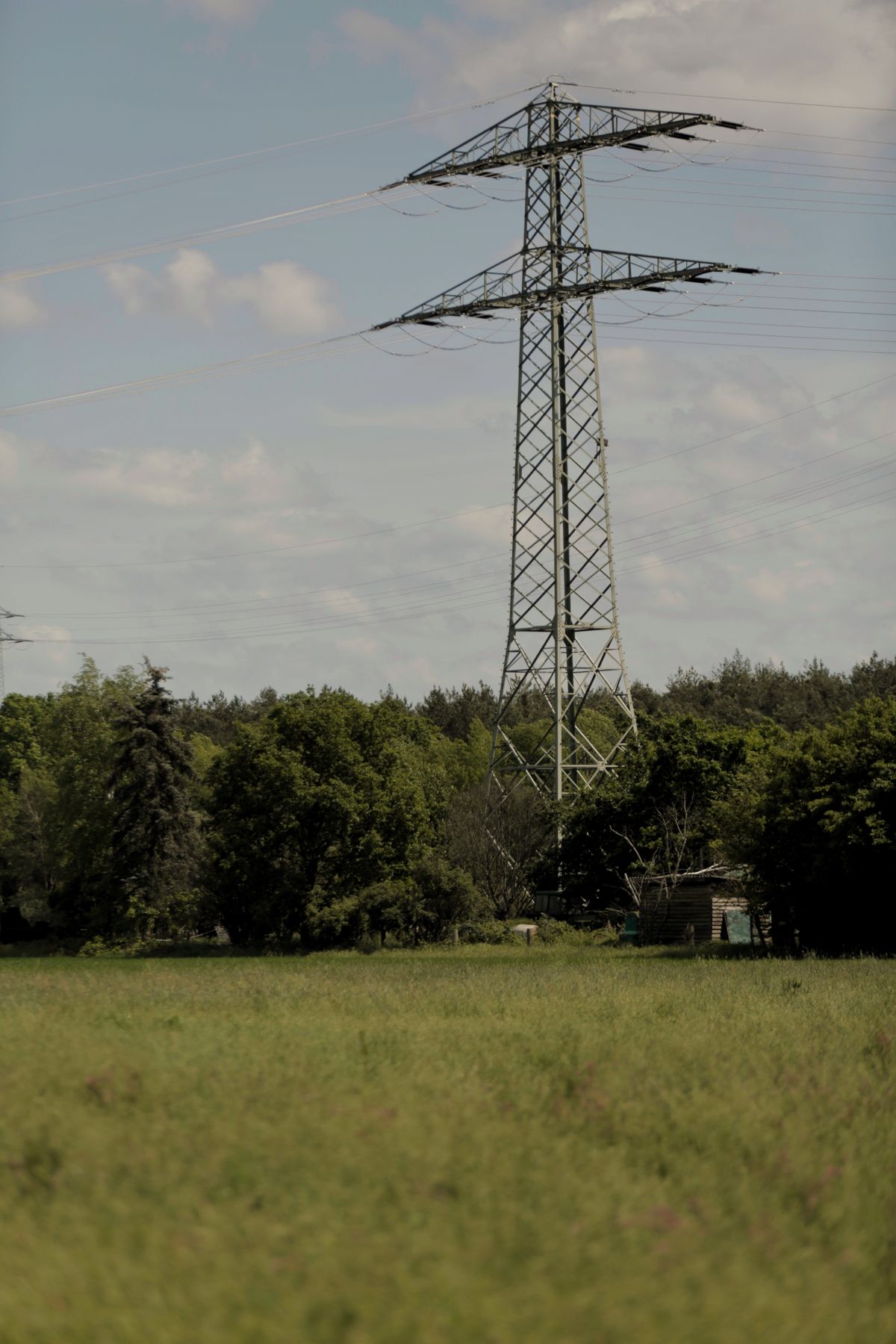
Q235B or Q355B: Choosing Steel Grade for Transmission Towers
Most transmission towers we ship are built from Q235B or Q355B. Those two grades cover the majority of line towers in China's export market, and the choice between them moves the price more than most buyers expect. It also changes how the steel behaves in the galvanizing bath, which is where good specifications sometimes go wrong.
Here is how the grades compare, when the higher one actually earns its price, and what belongs on the purchase order besides a grade name.
What the letters and numbers mean
Take Q355B. Q stands for the yield point in the Chinese standard, 355 is the minimum yield strength in megapascals for steel up to 16 mm thick, and B is the impact toughness grade. GB/T 1591 defines it. Q235B works the same way under GB/T 700, with a 235 MPa yield floor.
| Grade | Standard | Min. yield (≤16 mm) | Tensile range | Impact test |
|---|
| Q235B | GB/T 700 | 235 MPa | 370 to 500 MPa | +20 C, 27 J |
| Q355B | GB/T 1591 | 355 MPa | 470 to 630 MPa | +20 C, 34 J |
| Q355D | GB/T 1591 | 355 MPa | 470 to 630 MPa | -20 C, 34 J |
| S355JR | EN 10025-2 | 355 MPa | 470 to 630 MPa | +20 C, 27 J |
| A572 Gr.50 | ASTM A572 | 345 MPa | 450 MPa min. | Not required by grade |
| A36 | ASTM A36 | 250 MPa | 400 to 550 MPa | Not required by grade |
Two grades can look equivalent on a comparison sheet and behave differently on a tower. A572 Gr.50 has no Charpy requirement in the base grade, so a line in a cold climate needs A572 Gr.50 with a supplementary toughness clause, or a different grade entirely. That detail lives in the purchase specification, not in the grade name.
Does Q355B save weight?
Sometimes, and usually less than the yield ratio suggests. A Q355B member carries about 1.5 times the tensile load of the same Q235B section at yield, but tower design rarely runs on yield alone. Leg members are governed by buckling. Bracing is governed by slenderness limits. Tall towers are governed by deflection at the conductor attachment points, because the line's clearance and sag depend on how far the tower head moves under wind.
Where strength does govern, which is most often in the legs and the heavier bracing of high-load towers, Q355B typically trims 8 to 15 percent off the tower body weight. The steel costs more per tonne, roughly 3 to 8 percent in the Chinese market depending on mill and section, so the saving only lands when the weight drop is real. On a 40 m suspension tower on flat ground, Q235B with sensible bracing is often the cheaper structure. On a 70 m tension tower with long spans and heavy ice, Q355B pays.
Practical test: ask for two quotations, one in each grade, and compare the steel weight, not just the price per tonne. If the weight difference is under 5 percent, the higher grade is not paying for itself.
The part buyers forget: silicon
Hot-dip galvanizing is a metallurgical reaction, and silicon speeds it up. Steel with silicon between roughly 0.03 and 0.12 percent sits in what the galvanizing trade calls the Sandelin band. The zinc reacts fast, the coating grows thick and brittle, and it can crack or flake when the tower is erected or when bolts are tightened.
Good mills control silicon and phosphorus when the order is destined for galvanizing. The figures should be on the mill certificate, next to the carbon and manganese. A certificate that shows yield strength but not silicon tells you half the story. ISO 1461 sets the coating thickness requirement, but it cannot fix a steel chemistry that produces a coating nobody wants.
Toughness is not optional in cold climates
The letter grade sets the Charpy impact test temperature. B tests at +20 C, C at 0 C, D at -20 C, E at -40 C. A tower in northern China, Central Asia or the Andes sees service temperatures well below zero, and brittle fracture at a bolted joint is not a failure mode anyone wants to discover in January. If the line design says -20 C, order D-grade steel and put the impact energy requirement in the specification.
What to put on the purchase order
- Grade and standard, written together: Q355B to GB/T 1591, not just "Q355".
- Impact grade and test temperature, if the site is cold.
- Silicon and phosphorus limits for galvanized members.
- Mill certificate type: EN 10204 3.1 is the usual requirement for line towers.
- Bolt grade: 4.6, 6.8 or 8.8 to ISO 898-1, matched to the joint design.
- Substitution rule: state whether the fabricator may propose an equivalent, and who approves it.
The grade is one line on a drawing. The four lines around it decide whether the steel arrives galvanized, tough at low temperature and certified in a form the buyer's engineer will accept.
Standards & References
- ISO 1461 — Hot dip galvanized coatings on fabricated iron and steel articles
- ASTM A572 — High-strength low-alloy columbium-vanadium structural steel
- ASTM A36 — Carbon structural steel
- ISO 898-1 — Mechanical properties of fasteners, bolts, screws and studs
- EN 10025-2 — Technical delivery conditions for non-alloy structural steels
- EN 10204 — Types of inspection documents (3.1 certificate)
Questions we get on this topic
Is Q355B a direct substitute for A572 Gr.50?
Close, but not identical. Q355B yields at 355 MPa and A572 Gr.50 at 345 MPa, so the Chinese grade is slightly stronger on paper. The differences sit in chemistry limits, impact test temperature and the design code the line was calculated to. A substitution needs the buyer's engineer to approve it, not just a mill certificate showing a higher yield.
Does a higher steel grade always reduce tower weight?
No. Where strength governs, Q355B can cut tower body weight by roughly 8 to 15 percent against Q235B. On tall towers, deflection and slenderness often govern instead, and then the higher grade changes very little. The weight saving has to come from the design calculation, not from the grade name.
Which toughness grade is needed for a cold site?
The letter after the yield figure sets the Charpy impact test temperature: B tests at +20 C, C at 0 C, D at -20 C and E at -40 C. A line designed for -20 C service should specify D-grade steel, and the impact energy requirement belongs in the purchase specification alongside the yield strength.
Why does silicon content matter for galvanizing?
Silicon in the 0.03 to 0.12 percent band, known as the Sandelin range, makes zinc react quickly and can leave an over-thick, brittle coating that flakes when the tower is erected. Steel destined for hot-dip galvanizing is usually ordered with silicon and phosphorus controlled, and both figures should appear on the mill certificate.
Have a Tower Drawing With a Grade We Have Not Mentioned?
Send the drawing and the standard it follows. We will confirm the steel we can supply and whether a substitution is needed.
Request a Quote